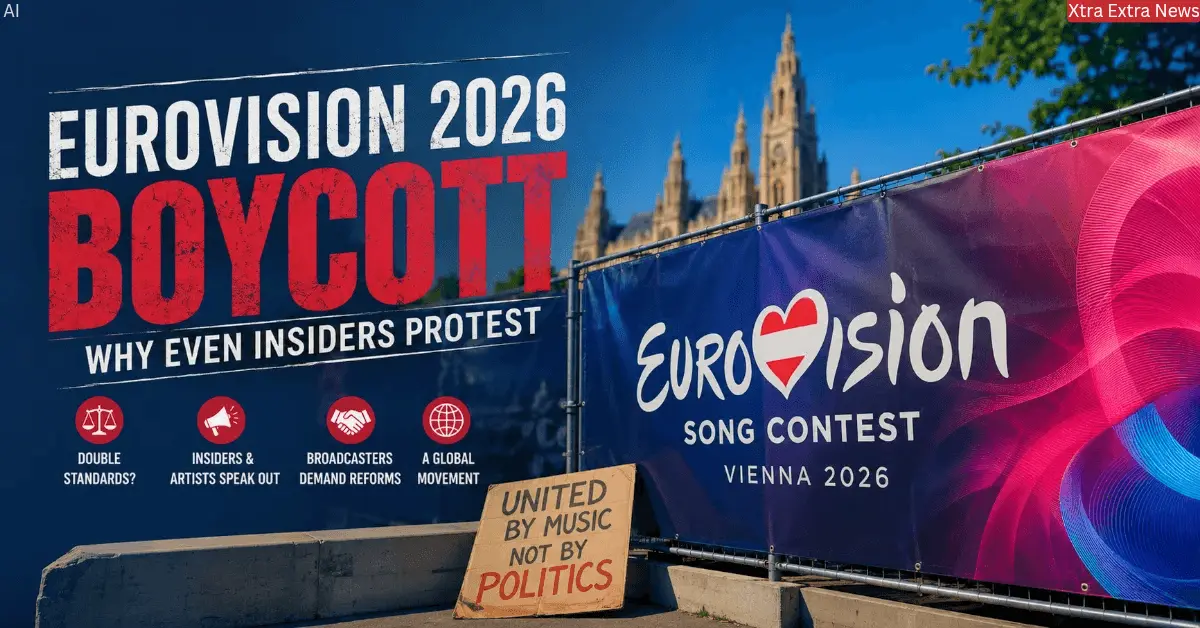

Eurovision used to be all about fun music, bright costumes, and countries coming together to enjoy a big show. But in 2026, people are not talking about songs or performances. They are talking about the Eurovision 2026 Boycott.
What started as small online complaints a few years ago has now grown into a massive movement. Artists, TV channels, fans, journalists, and even former Eurovision workers are all involved. People want to know: Is Eurovision really fair to every country? Millions still watch the show, but now, the drama around it gets just as much attention as the contest itself.
Why Is The “Eurovision 2026 Boycott” Suddenly Everywhere?
This did not happen overnight. Problems were already building up in 2024 and 2025. Back then, most complaints stayed inside fan groups and Reddit pages.
But 2026 changed everything.
Some artists quit their national selection shows before Eurovision even started. Some broadcasters began speaking publicly about problems inside the competition. Former Eurovision performers and staff members talked about bad communication and poor decision-making from the top.
And then social media did what it does best — it made everything go viral.
TikTok, YouTube, X, Instagram, and Reddit were all full of debates, interviews, and protest videos. Millions of people saw this content very quickly. The Eurovision 2026 Boycott was now a global conversation.
Before 2026, only die-hard fans and activist groups were speaking up. Now, every day, viewers and music journalists joined in too. Everyone kept asking the same questions:
- Why did this protest grow so fast?
- Why are people who work inside Eurovision also complaining?
Most observers say the main reasons are distrust, poor communication, and frustration that past criticism was never properly addressed.
Eurovision 2026 Boycott Countries: Which Nations And Broadcasters Are Raising Questions?
A big part of this whole story is the growing list connected to the Eurovision 2026 boycott countries.
Several artists from Nordic and Benelux countries quietly stepped away from their national selection shows before the Eurovision season began. Not all of them used the word “boycott,” but many said clearly that they were unhappy with how Eurovision was being run.
Some kept their language calm but questioned how decisions were made. Others spoke directly about fairness, transparency, and inconsistency in the rules.
Things got even more serious when big broadcasters entered the conversation.
Broadcasters like RTVE and SVT were linked to formal letters asking for governance reforms and stronger accountability from Eurovision leadership. In simple words, they wanted clearer rules and better oversight over how Eurovision is managed.
This made many viewers search online to find out which countries were part of the Eurovision 2026 boycott discussion, and whether more broadcasters might push the EBU harder in the coming months.
Not everyone agreed with the criticism. Some broadcasters defended Eurovision and said the contest should stay focused on music. But the disagreement between members created tension that was hard to ignore.
Also Read: What Mortal Kombat 2 Really Did To Noob Saibot
The Real Reason Behind The Eurovision 2026 Boycott Debate
The biggest complaint at the heart of the Eurovision 2026 Boycott is this: double standards.
Critics say Eurovision does not apply its rules equally to all countries. Some nations are treated more strictly, while others seem to get more flexibility. The EBU says Eurovision is politically neutral and is a competition between broadcasters, not governments. But many people no longer believe that is true in practice.
Reports about internal disagreements and questions about credibility made things worse.
People kept asking: if rules exist, why do they not apply to everyone equally? These questions are now very hard to ignore because fans, artists, journalists, and broadcasters are all asking them at the same time.
Inside The Biggest Eurovision Security Operation Ever
Security at Eurovision 2026 reached a level never seen before. Authorities expected large protests during the contest week, so police presence around the venue was very high. Organizers also used restricted zones, crowd-control systems, and emergency response teams. Many fans were shocked because Eurovision has always felt like a happy celebration, not a high-security event.
Can “No-Vision” Events Change Eurovision Forever?
During the Eurovision final, alternative online shows called “Alt-Eurovision” or “No-Vision” went live. These streams provided various music events that were organized apart from the official competition schedule. Some focused on artistic freedom, others directly supported protest campaigns. Many younger viewers chose these streams over the official broadcast.
Ticket resale demand was also reported to be lower than in previous years — another sign that some audiences are losing interest.
The Eurovision 2026 Boycott showed exactly how powerful online movements can be. Eurovision will likely continue for many more years. But after 2026, viewers, artists, and broadcasters are clearly expecting more fairness, transparency, and accountability from the competition.
Also Read: 12 Countries On Alert After Hantavirus Cruise Deaths
 By
By