
Have you ever heard the words Pink Moon and thought — wait, does the moon really turn pink?
You are not alone. Millions of people search for this every year. The name sounds very different. It makes people stop and think. It makes them curious.
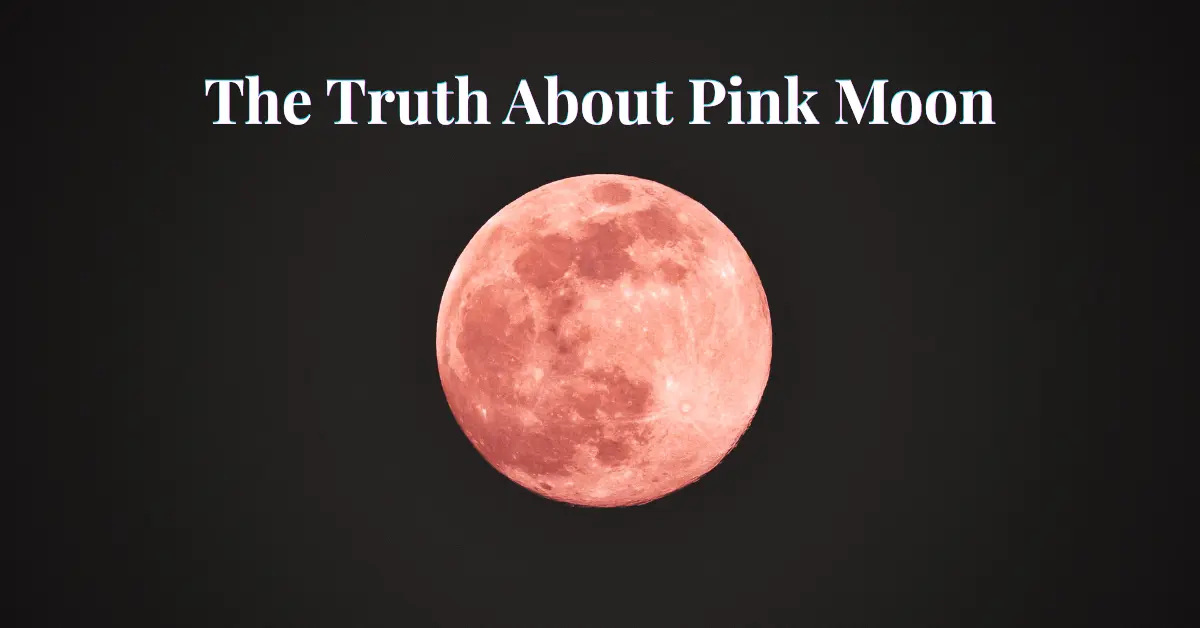
But here is the truth – The moon does not turn pink. It looks the same as any other full moon — white, off-white, or sometimes a little yellow. No special color. No big change in the sky.
So then why do so many people talk about the Pink Moon?
Because the name has a story behind it. And when people learn the real meaning, they almost always say — “Oh wow, that is actually more interesting than I expected.”
Let’s find out why.
The Real Reason Behind The Name Pink Moon
The name Pink Moon has nothing to do with the color of the moon.
It comes from a plant.
There is a small plant called Phlox subulata. Every year in early spring, this plant grows tiny pink flowers. These flowers spread across the ground in large groups. In some places, they cover whole fields. You can easily see them.
Now here is the interesting part.
These pink flowers bloom around the same time every year — right when the April full moon appears in the sky.
Long ago, people noticed this. They saw the flowers and the full moon coming at the same time, again and again, every year. So they connected the two things together.
They called it the Pink Moon — named after the flowers, not the moon.
Simple, right? But also very clever.
How Early People Used The Moon To Track Seasons
Today, we have phones, calendars, and clocks. We always know what month it is and what day it is.
But long ago, people had none of these things.
So how did they track time?
They watched the sky. They watched nature.
The moon was very helpful for this. It changes in a clear pattern every month. People could see it easily. Many groups of people, including the Algonquin people of North America, gave special names to each full moon of the year.
Each name was based on what was happening in nature at that time.
For example:
- When plants started growing, the moon had a name associated with growth
- When the weather got colder, the name showed that change
These names were like a natural calendar. They helped people know when to start farming, when to gather food, and when to move from one place to another.
The Pink Moon is part of this system. It tells people — winter is over, plants are growing again, and a new season has started.
Different Names Of Pink Moon In Different Cultures
Not every group of people used the name Pink Moon. But many cultures had a similar idea.
Different people around the world watched nature and gave the April full moon their own name. Some names were based on melting ice. Some were based on warmer weather. Some were based on new plants coming out of the ground.
The names are different, but the meaning is the same — the season is changing.
There is also a connection in the Jewish tradition. The timing of this full moon helps decide when the festival of Passover begins. So this moon is important in more ways than one.
All these different cultures, all these different names — they are all pointing to the same thing. New plant growth. Warmer days. A fresh start.
Does The Full Moon Pink Moon Really Turn Pink?
Let’s come back to the most common question people ask when they search for full moon pink moon — does the moon actually look pink?
No, it does not.
The full moon pink moon looks like any normal full moon. White or off-white in the sky. Nothing unusual.
But wait — sometimes the moon can look slightly red or pinkish. When does that happen?
It can happen during a lunar eclipse. It can also happen when there is a lot of dust, smoke, or pollution in the air. In these cases, light passes through the atmosphere in a different way, and the moon gets a slight color.
But this is not special to the Pink Moon. This can happen with any full moon, at any time of the year.
So the name Pink Moon is symbolic. It is about flowers and seasons — not about the color of the moon.
Other Names And Interesting Facts About Pink Moon
The Pink Moon has another name, too — the Sprouting Grass Moon.
Around this same time, grass starts growing again after winter. So people used this name as well. It is another sign that the cold season is ending.
Here is one more fun fact – Sometimes, the Pink Moon can also be a Supermoon.
This happens when the moon comes closer to Earth during its orbit. When that happens, the moon can look slightly bigger and slightly brighter than normal.
The difference is small, but some people can notice it if they look carefully.
So the Pink Moon is more than just a name. It carries history, nature, and tradition, all in two simple words.
For more interesting information, visit our website.

 By
By